
Shelling Peas
Betty and I make a garden.

Hello, dear readers, to this week’s story! I’d be mighty grateful if you would help my newsletter receive some love from Substack by pressing that little heart button above and below!

We moved into the house on a fiercely hot August day. The next morning found me crashed on a trash-picked lounge chair, befuddled as to why we now owned many dilapidated rooms and the dying apple tree I was sitting under. I could accept the rooms but the tree broke my heart. Its previous owner had peeled a wide circle of bark off it. Trees are no good, he said. Their roots burrow into foundation walls.
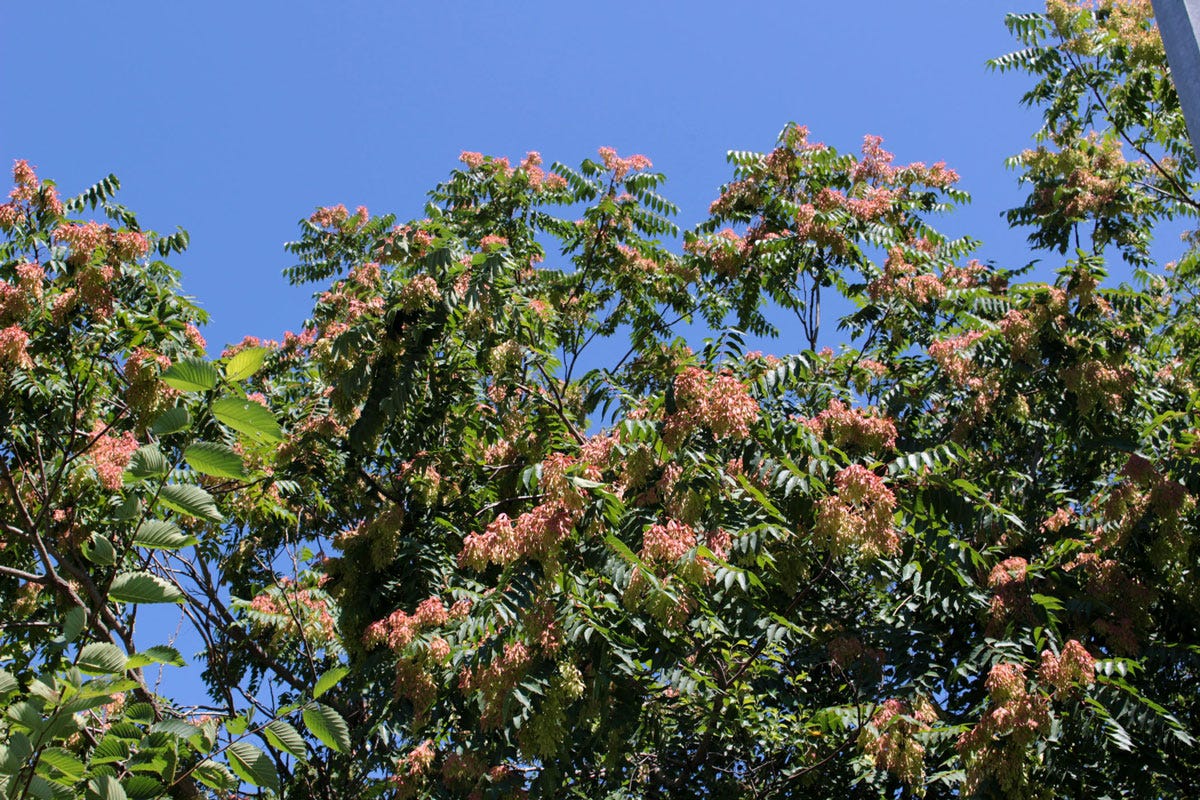
Beyond the tree was a mess of chest-high weeds and, in the back, a tangle of saplings that the neighbor on one side of the house claimed was the cause of her son’s asthma. I’d have to cut them down immediately, she said. Someone later told me they were called Tree of Heaven, the star of the book, A Tree Grows in Brooklyn.
I was clueless about what to do with my dying apple tree, the asthma-provoking saplings, and the weeds between them. My three-year-old son happily rolled around in the dirt and my husband, an expert at putting up bookshelves, had no interest in even talking about the garden. There was just me and all the possibilities I believed this unpromising landscape could hold as soon as I learned how to do it. I dreamed of having as lush a garden as Steve and Betty, the neighbors on the other side of the house.
Steve was from the Bronx. Betty was from Georgia. They had created a vegetable farm: nine neat rows in full bloom. Collard greens, spinach, peas, string beans, turnips, ramps, tomatoes—cherry and beefsteak—and eggplant The side borders were for herbs, marijuana, and marigolds. In the back was a thick stand of Rose of Sharon bushes that Steve pruned in March, about the time that Betty turned and fed her field.
Betty came over to the fence and introduced herself, then asked what I was going to do about the apple tree. It used to produce at least a bushel of tart apples, perfect for pies and putting up applesauce. I said I planned to give it a merciful burial and plant another in its stead. Betty was six feet tall, generous although given to occasional orneriest. If she liked you she liked you in full measure. If she didn’t it was better to back away from her. She decided after our apple tree conversation to like me. She offered up Steve to help cut it down. He was the opposite of her, short and good natured, able to handle Betty’s moods with jokes and a joint. He promised to come over sometime in October with a chain saw and make quick work of reducing the tree to a pile of logs. Betty counseled to keep the asthma saplings where they were, their bad reputation a complete myth, and their fluffy pink flowers a beauty to behold.
As the summer pressed on into fall, she advised a two step approach to my sliver of an acre. It was too late to plant anything but a new apple tree. I should, though, turn the dirt and feed it with manure. Betty happened to have a great store of aged manure that she composted herself and one day I came home from work to find that several sacks of it had been dropped over the fence. She was a demanding teacher, allowing no slacking just because I was tired after work or a weekend of chasing my son. She decided Saturday would fit us both, often at the hour when she could direct me from her second floor window as she hung her weekly wash on the line that stretch over her crops. My mom visited us in September and said she had never seen such beautifully hung laundry. I had no idea what she meant.
Betty was a lot like my mom—funny, didactic, encouraging, and at times harshly opinionated. The women met across the fence a few times, and it soon became apparent that they had different ideas about the garden. My mom paid for the new apple tree but argued for a bit of lawn where her grandson could play. She liked the idea of planting rose bushes on either side of the lawn just like her garden at home. If I insisted, there could be a few tomato plants in the back. A lawn to Betty was a waste of precious ground. My son could toughen up by playing out front in the street like every other kid on the block. Roses, she said, were futile, almost always defeated by diseases. Each woman was sure I intended to follow her plan. I hid from view the pile of garden magazines and books that I hoped would help me create a fair rendition of an English garden.
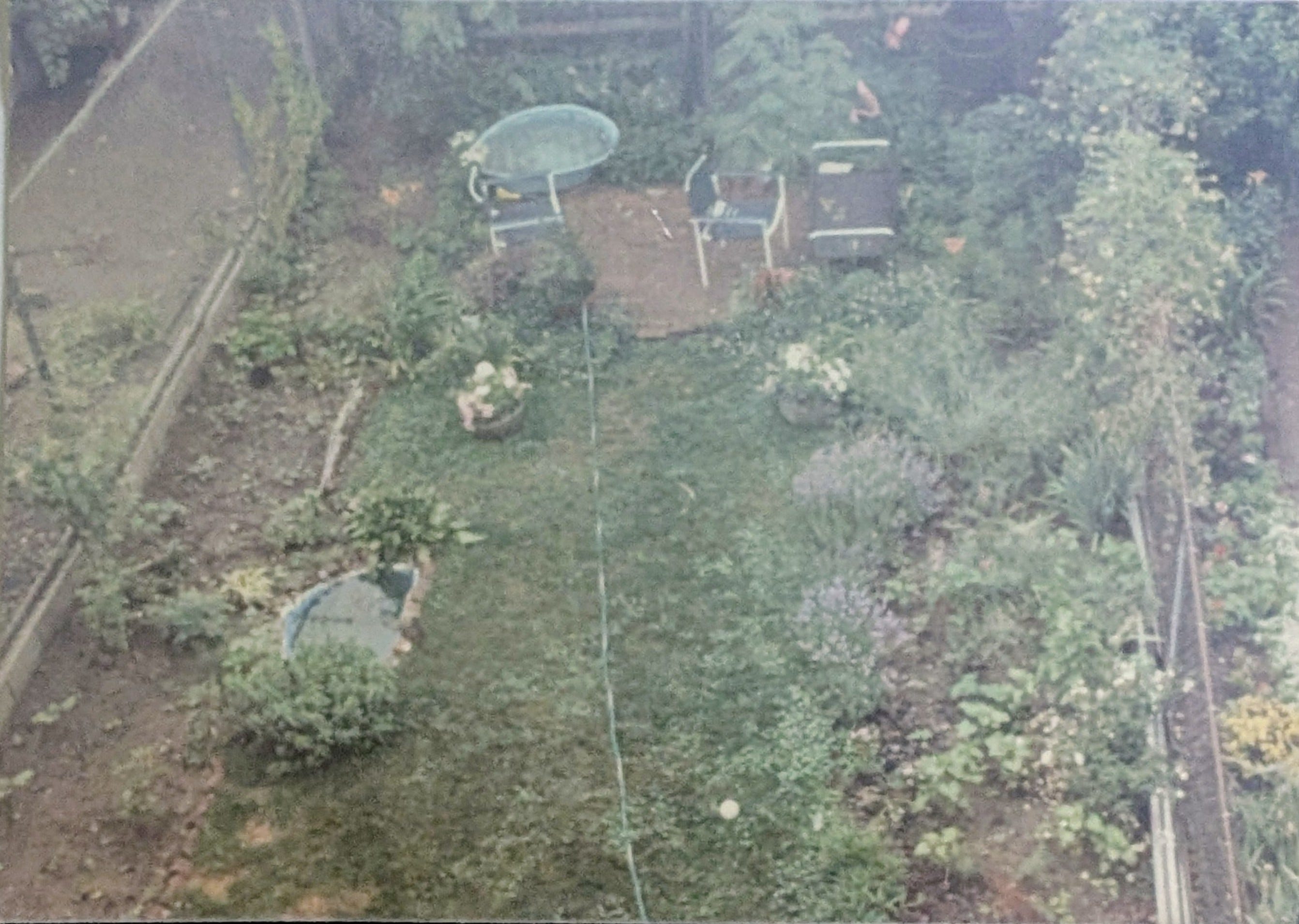
The secret to loving a garden is to adhere to your own designs. By late September, my yard showed the skeleton of my desires. An undulated path cut through the middle. On one side I planned a flower bed, on the opposite side, a herb garden. Perhaps I could create a tiny goldfish pond with a water fountain. Toward the back, in front of the sprawling Tree of Heavens would be a patio. The exact spot was identified by a pile of old bricks that my husband and I collected from the lots of demolished buildings around the neighborhood. I unearthed two old cement flower pots while excavating the pond, and rolled them toward the bricks. The outlines of my plan remained vague, even from Betty’s second floor laundry line perch.
Mid-October arrived, the time for Betty’s harvest. She and Steve were out every morning, even before work, picking their ripe crops. One Saturday she told me to come over and I walked through their house to the back door that opened out on their deck. “Here,” she said and shoved a large pile of peas across the table toward me.
I began to shell them, not as fast as Betty but fast enough. There was a big burlap bag of them on the table and a half a day left to shell them before their sweetness would begin to fade. Steve brought us beers. Betty began telling stories about growing up on a Georgia farm. She wasn’t sure her decision to move up north had been right until she met Steve and they bought the house that gave her a new farm.

Two beers later, followed by a joint, the pile of peas between us was somewhat reduced.
“You know how you can tell what kind of a person someone is?” she asked. “If you can shell peas together.”
Pea shelling kept me in Betty’s good graces for years until the spring I thoughtlessly put up a stockade fence between us. I wanted some privacy and a nice background to my blooming roses and herbs but it left no place for Betty and me to talk. Worse, in deep ignorance of neighbor protocol, the fence was constructed with its good side facing my yard instead of hers. Betty was more than ornery. My transgression killed our friendship. It didn’t matter at all how well I shelled peas.
An important book to read for the times we’re living through!

The 1st Amendment has not always been the sanctified principle in our country’s history as it is today. The stories in Christopher Finan’s new book leads readers throughout American history by telling stories of ordinary citizens who have strengthened our constitutional right to free speech. Through them, he demonstrates the importance of resisting efforts to ban books, suppress cultural and academic ideas, promote government misinformation, and spread hate speech and anti-democratic efforts that suppress the cultivation of a free and robust marketplace of ideas.
Find it today at bookstores everywhere!
One more thing before you go….

You know, when I began to think of this piece I realized how lucky I was to have a gardening angel (thank you, Betty!). I've remade my current garden at least five times and, although I'm better at it now, its always a work in progress both frustrating and lovely to do. She has stayed one of my guiding resources for many things in life.
Oh, I'm sorry you lost your friendship over the fence but such a great story.