
The Uninvited Guest
Professor Quackers forces us to look straight into the eyes of Thanksiving dinner.

Dear Readers: Ever have one of those work weeks where you start out strong with something you think will be great and then it all fizzles out? That’s been my week. So instead of bringing you a mess, I’m pulling out one of my favorite stories from 2022. It’s extensively rewritten but it’s still about the unexpected and a search for Thanksgiving dinner. Please come back next week when I will surely have ironed out the kinks. ~ P
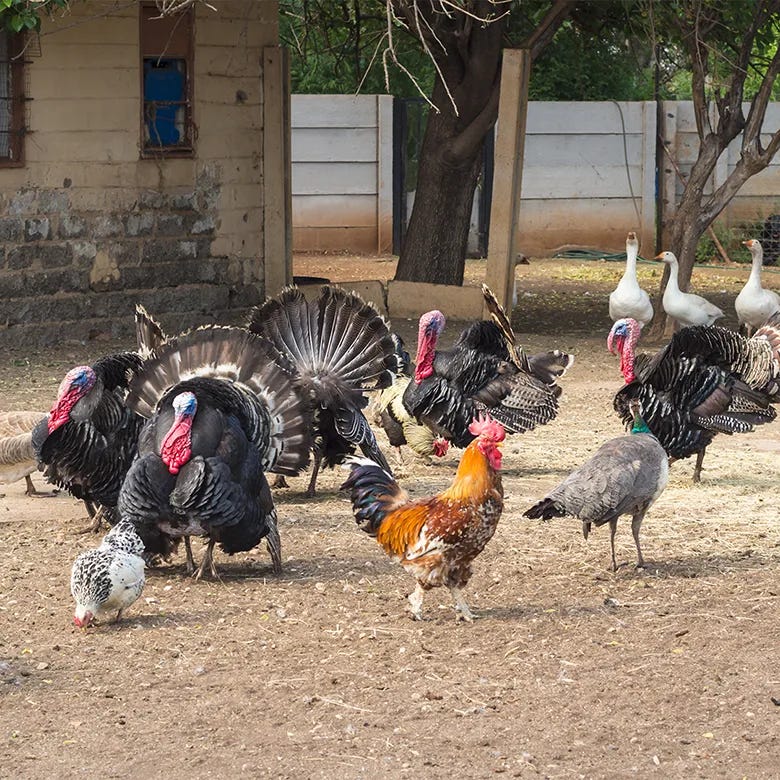
Introduction
The Unexpected Guest
I was probably home for three minutes from a bad workday when my youngest son emerged from the basement. His friends were down there doing what they usually do, namely laughing and talking trash over gaming skills.
He was very excited. “Wait until you see what’s in the basement!”
Parents practiced in teenage behavior know this can go either way. The ruckus coming from below was not promising.
There, surrounded by five of his equally excited friends, stood a duck. They were so proud of their adventure together: My son and a friend were driving about from somewhere to somewhere else when they got the brilliant idea to save a duck from one of the neighborhood’s live animal markets. The store’s owner pointed to a wall of cages stuffed with ducks and chickens. The boys decided on a duck because they didn’t know much about ducks. They picked the one that looked the most distressed. The owner jerked it out of the cage and was about to chop off its head when my son intervene and told him they wanted it alive. The owner didn’t seem happy about this but the boys handed over the duck’s price of $35, and then he stuffed it into a box. My son cradled the box on his lap as they drove over pot-holed streets to home. It didn’t squawk, it didn’t move, and when they set the box down in its new living quarters it refused to leave the box. One of the boys gingerly reached in, lifted it up, and planted it on the cold cement floor. It hadn’t moved since.

By this time the sun had set and it was absolutely wrong to shove the poor duck out into the dark to waddle alone around Brooklyn. I retrieved a large galvanized bucket used for keeping beer cold at parties and instructed the boys to fill it with water. Upon being placed in the water, the duck lowered its head beneath the surface where it stayed for the longest time, probably parched and unhappy about this latest turn in its life—from a dank cage to a semi-dark basement surrounded by crazy looking creatures who were calling him Professor Quackers.
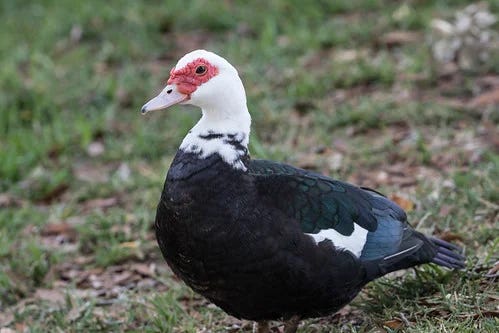
I retreated upstairs and collapsed on my bed, head face down into a pillow, matching Professor Quackers’s instinct to shut out the world.
An Unexpected Desire
My neighborhood probably has more live animal markets per capital than any other in New York City. This is due to the various nationalities that call it home. Over the last several decades, because of wars, social upheaval, and economic distress, the area’s earlier populations of Italians, Irish, Norwegians, and Puerto Ricans have been joined by people from China, most Middle Eastern countries and the Caribbean islands, and also includes Russian Ashkenazi Jews. Hipsters have made inroads over the last decade.
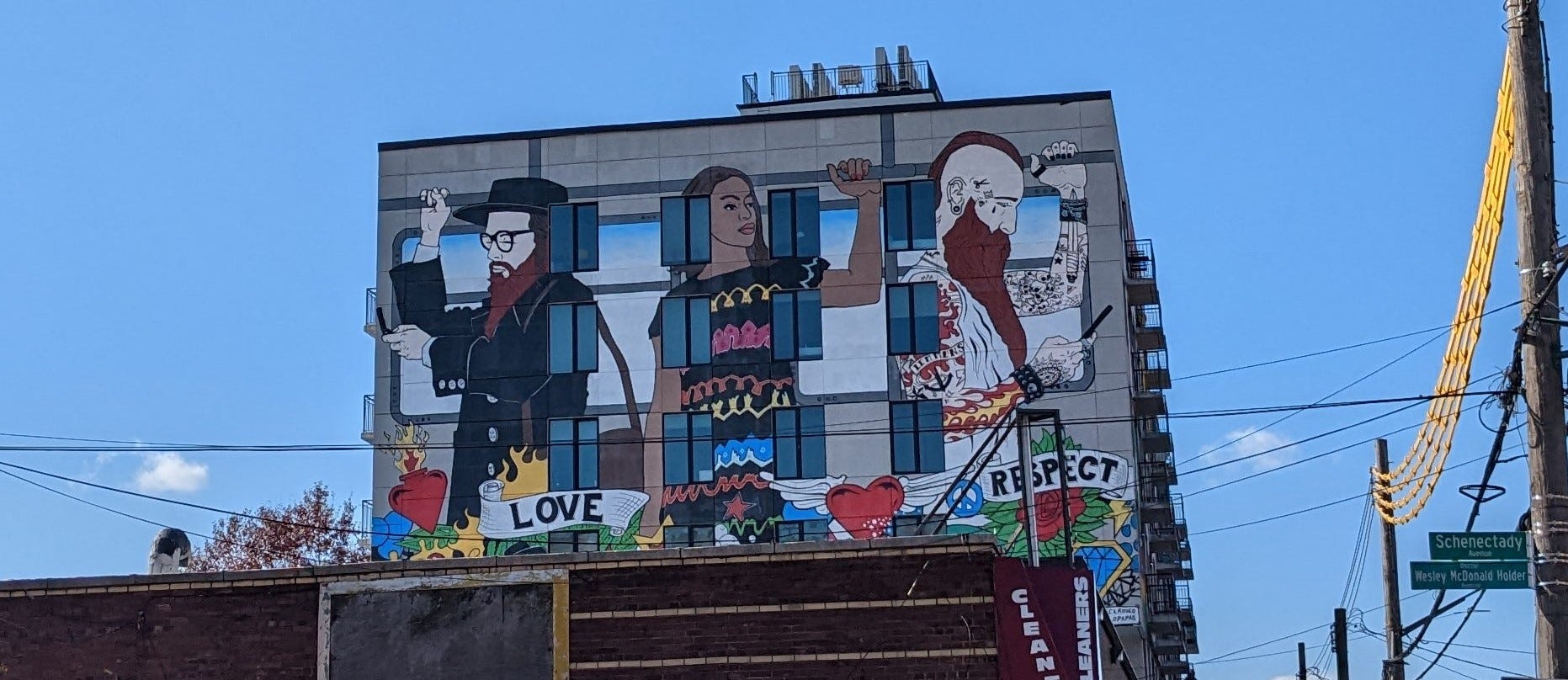
Live animal markets play central roles in each of these cultures. For Chinese, Caribbeans, and hipsters, it’s the freshness of the meat. For Muslims and Jews, it’s their religious requirements in how the animals are slaughtered. Chickens, ducks, rabbits, goats, lambs, and some game animals are offered in most of the markets. Turkeys are in demand by everyone when Thanksgiving and the holidays come around. All the markets advertise that their livestock is raised free of antibiotics on small farms in nearby states, many by Amish farmers. Most of the animals are allowed to spend their days happily roaming around open fields. Prominently displayed on signs is the promise that their workers were once farmers in their countries and experts in husbandry and humane slaughtering. Halal and kosher markets guarantee that strict Muslim and Jewish rules are followed.
(This video is a good introduction to how the markets serve the different communities. You’ll meet your teacher, Carlo Formisano, later in the story.)
My husband continues to have PTSD from the overcooked oval-shaped blocks of turkey his mother served every Thanksgiving. Ever since we married, I’ve tried to heal him with organic, natural, free-range, pastured, and heritage breeds. Someday a freshly killed and skillfully cooked turkey might even cure him.
The Search
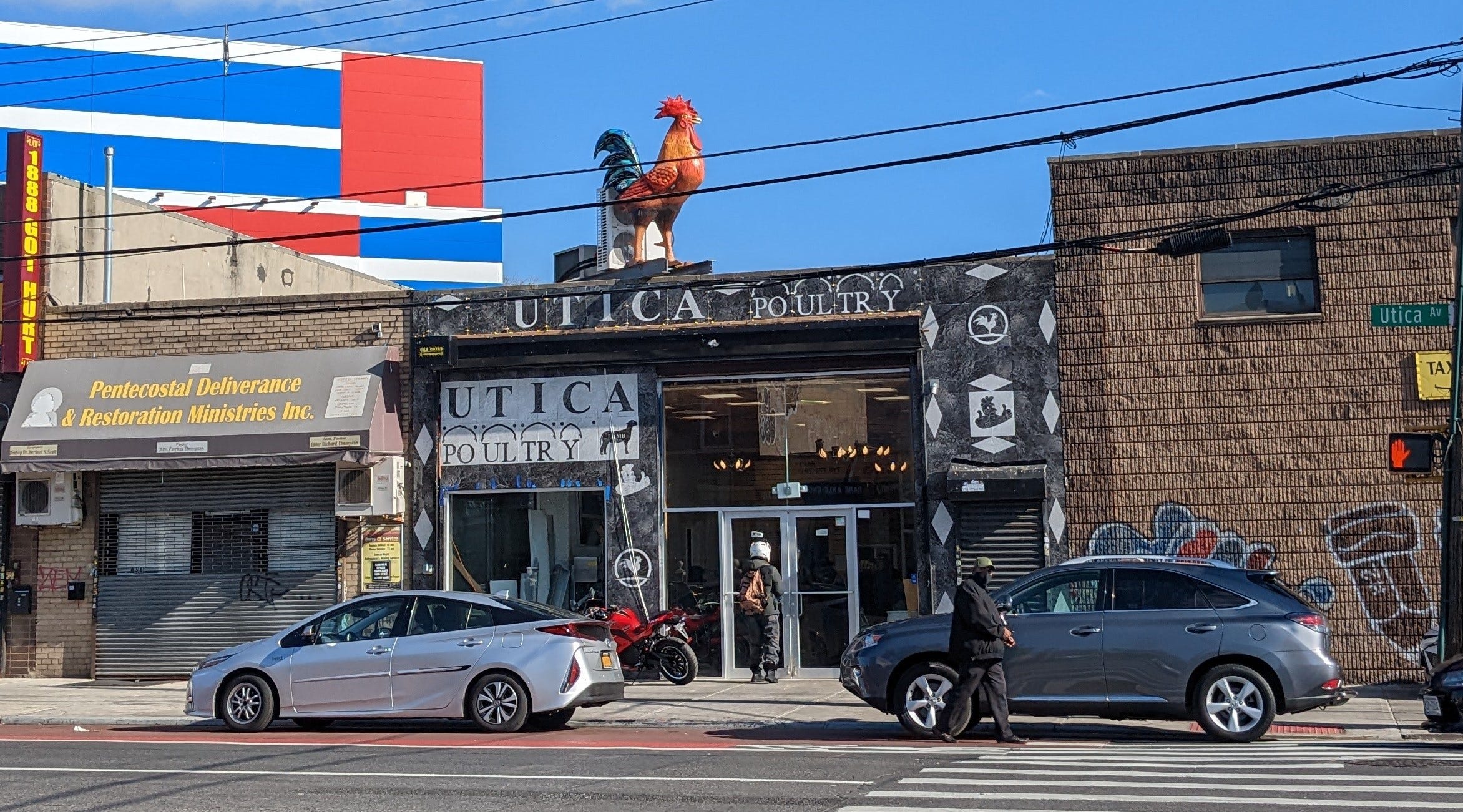
The huge red rooster perched on the roof of Utica Poultry in Crown Heights is visible for blocks. It’s head is turned defiantly away from the human activity below.
Utica is one of the fanciest of the live animal markets. Its entrance is framed by engraved black marble. Inside it is lit by brass chandeliers with frosted glass shades. A long line stretched from the cashier’s window to the door. Half the people turned around as I took my place at the end. Others straightened their backs. Besides being the only white person in the store, I was also the only one without a large bag or shopping cart.
After awhile, when the line didn’t budge, I asked the woman in front of me what might be going on. She said the man at the counter had forgotten his ticket.
“What ticket?” I asked.
“Reservation ticket,” she said.
I didn’t have a reservation ticket.
“Maybe you could buy a big chicken,” she said helpfully.
I thanked her and left to test my luck at a market in Bensonhurst.
La Pera Brothers Poultry is about 70 years old and Carlo Formisano has been managing the store for half of them. No one knows where the La Pera Brothers are now but the market has always been on 61st Street across from the subway tracks. When this was an Italian neighborhood, all the live animal markets were here. But Puerto Ricans gradually moved in and the Italians moved south. All the markets, except La Pera, moved with them or closed. It is now sandwiched between a lumber yard and an auto body shop. La Pera is popular with the Chinese who have settled in the area and who depend on the market to supply their nearby restaurants.
The market’s procedures were similar to those at the Utica Poultry—another long line, everyone with a large bag or shopping cart. A sign inside recommended calling ahead with your order. I returned home and called. No one picked up. I tried again a little later. Nothing. The first thing I did when I awoke on Sunday was call La Pera and a man answered.
“Is it too late to order a turkey?” I asked.
“Come tomorrow. Or Tuesday,” he said.
I told him I would be there the next day when they opened at seven a.m.
“I found a fresh turkey,” I told my husband with a little too more enthusiasm.
“I hate turkey,” he said then escaped to his room.
“You’ll love this one,” I called as he closed the door behind him. How could he not love the freshest, most healthy, well-raised turkey in Brooklyn? A turkey raised to make someone happy?
We talked about it later in the day. He did not give his blessing to killing a turkey just for us.
You may think this means we had a vegetarian Thanksgiving dinner. But this would not be acceptable to my three carnivores. The men settled on a small loin of pork without a vote from me. They were lucky that anything arrived on the table.
Epilogue
Professor Quackers Finds a Home
I returned to the basement. My son was alone, reading in bed. Professor Quackers had left his bucket and was eating bread from one of my mixing bowls.
“The duck has got to go,” I said.
“Okay,” he said, not looking up from his book.
“I mean it.”
“It will be.”
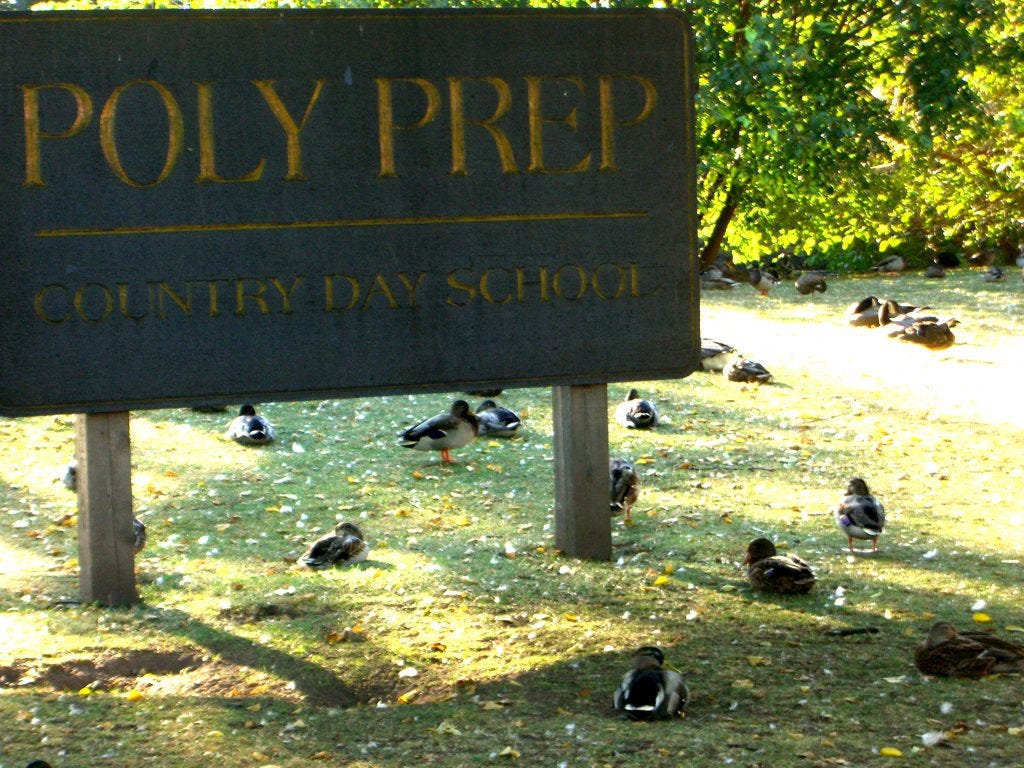
Its times like this when you have to trust your child to do the right thing. And he did. The next day he and his friend carried Professor Quackers over to the fancy prep school near our house. On the bucolic campus is a commodious pond that attracts many ducks and geese. They snuck the Professor through an open gate and watched it toddle off to join its new family. We would stop and visit every now and then and it seemed very happy, fat and free.
Give some love by pressing the little heart button and don’t forget to…..

Great story, Pat. You remind me of how times change and ethnicities morph in that crowded international scene of New York City. When I lived there in the 1960s, all the little neighborhood fruit&vegetable stands were owned by Italians. When I went back 25 years later, they had all changed and were now run by Koreans. "Stop at the Koreans on your way home and pick up a head of lettuce" was the instruction handed out--and everyone knew what you meant by "the Korean's." I wonder who runs those places now? Investigate for me, please!
Charming. I must admit that I even enjoy turkey that has been frozen.