
Tom and I Sneak Out and Go Exploring
All to find the lost Colony.

My friend, Tom, called and asked if I wanted to go on an adventure. This wasn’t unusual. He and I worked at the same university: he as a carpenter, me as the magazine’s writer. He’d stop in at my office or I’d see him around campus and we’d spend a chunk of time talking together. Of all of Tom’s talents, his most beguiling is his storytelling gift. If nothing else, I’m a great listener and hearing him speak about growing up in Brooklyn and his heartbreaking family was always more meaningful than whatever pressing duties I was supposed to be doing. Sometimes he’d tell me rumors about an interesting forgotten place. He was good with directions. I had a car. Off we would go, putting common sense aside, to discover what was left of it.

Two weeks earlier, Tom had shattered his foot. His doctor and girlfriend had ordered house arrest for at least the next month and a half. He was miserable and needed to break out. There was also the matter of the drone he had recently purchased and was anxious to launch.
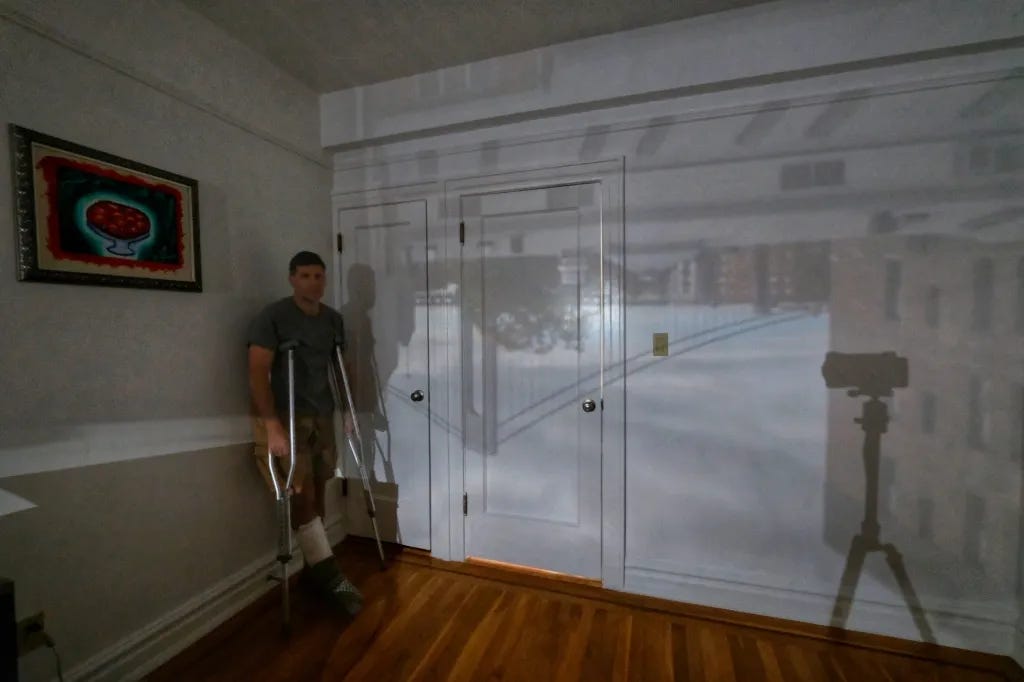
“Of course,” I replied. “Where to?”
“The Colony ruins,” he said.
I picked him up the following afternoon.
Tom’s directions took us to the New York City Farm Colony. Launched in 1829, it was the city’s response to the miserable conditions of the city’s poorhouses. The most notorious was on Blackwell’s Island in the middle of the East River. Destitute men and women, widows unable to secure work to support their children, and the elderly with nobody to care for them were housed in large overcrowded buildings. Husbands and wives lived in separate dormitories, their children often taken away to the orphanages on the grounds. Nearby buildings held prisoners and the physically and mentally disabled. A hospital at the tip of the island treated people with incurable and infectious diseases. Food was scarce and hygiene questionable. No one was allowed to leave the island.
The Colony would be different, a utopian experiment located on rural Staten Island. People would live in houses surrounded by fertile farm land where they would grow different grains, fruits and vegetables for their own consumption. The surplus would be sold back to the city to cover the expense of operating the community and to feed the poor in the city. The city took control of the Colony in 1898. By the early 1900s, it housed 2,000 people.
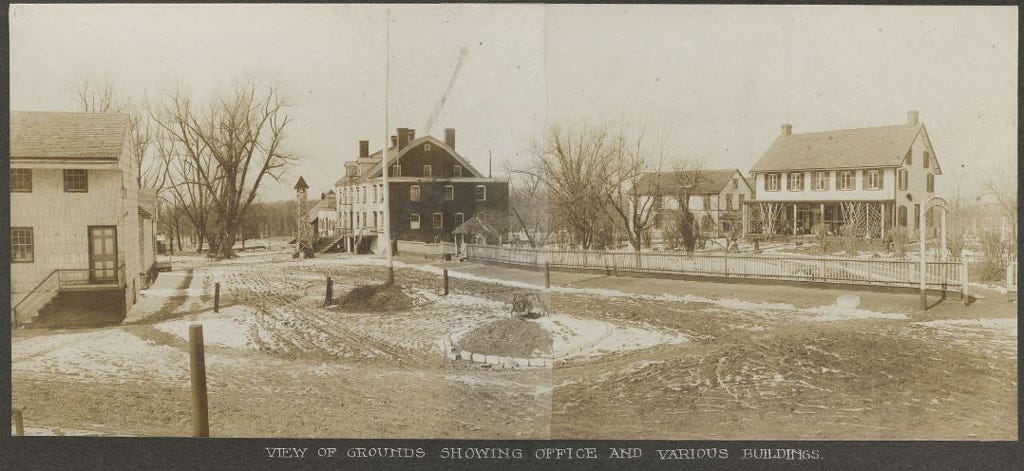
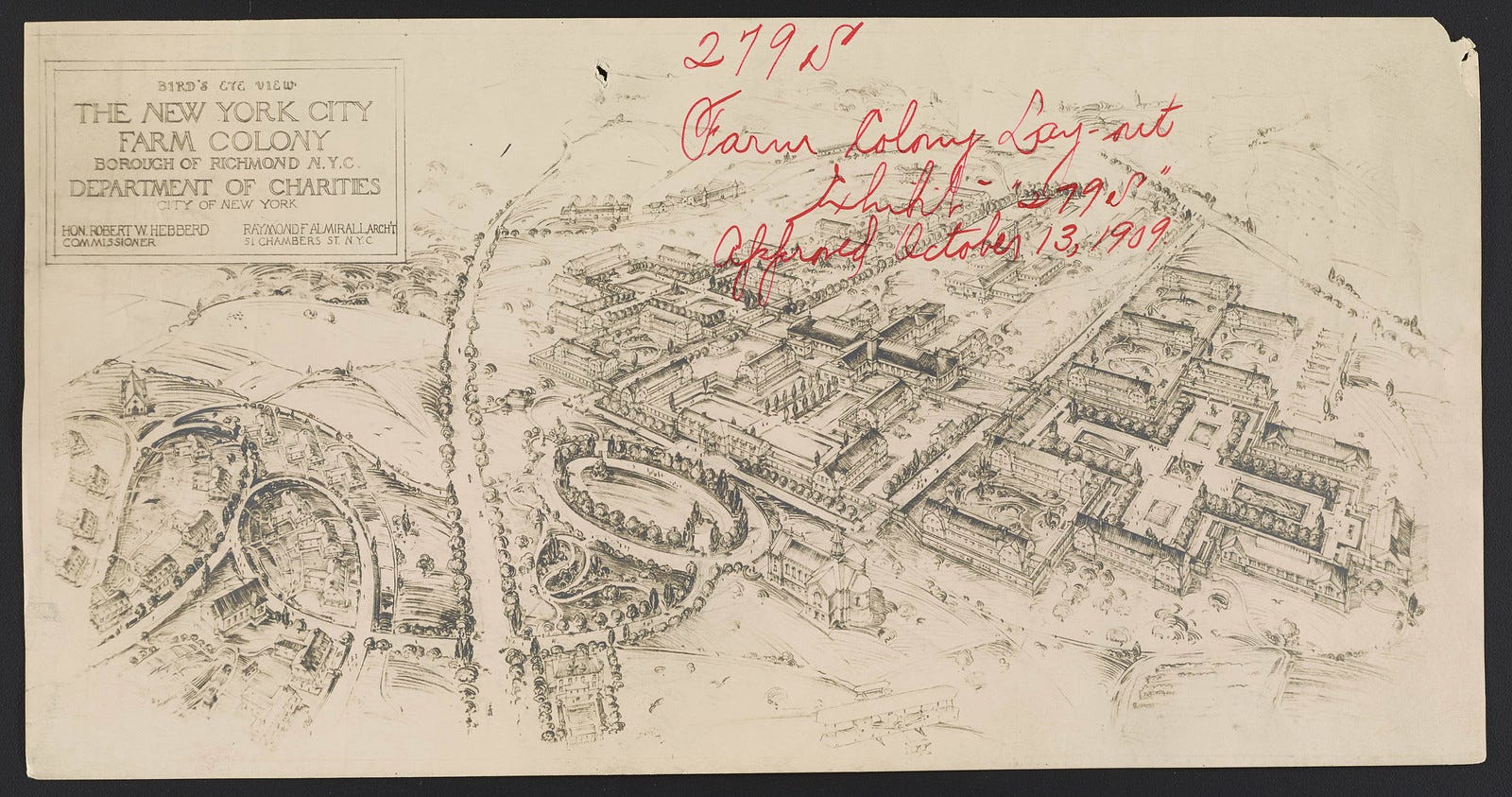
Every inmate who comes to the Farm Colony, except those who are completely disabled, does something, the different occupations being:
Routine cleaning and keeping up of the Plant.
Outside work on the farm and grounds.
Mechanics laborers employed in construction.
Mechanics employed in the shops as follows:
Carpenter Shop
 Paint Shop
 Tinsmith Shop
 Blacksmith Shops
  Plastering
  Tailor Shop
  Seamstress
  Broom Shop Print Shop
  Map and Rug Making
—from the Colony’s 1914 Annual Report


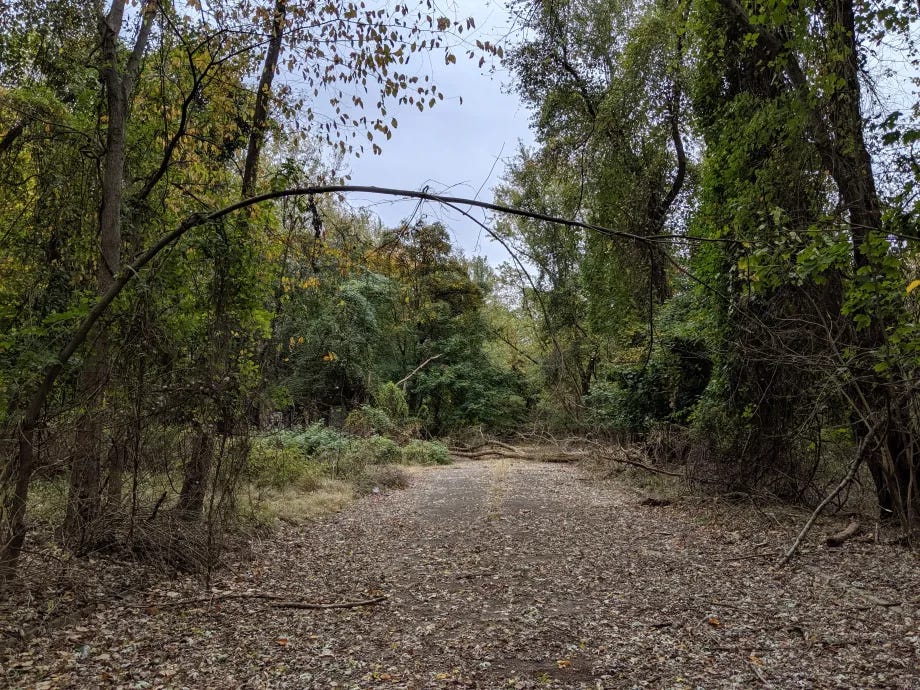
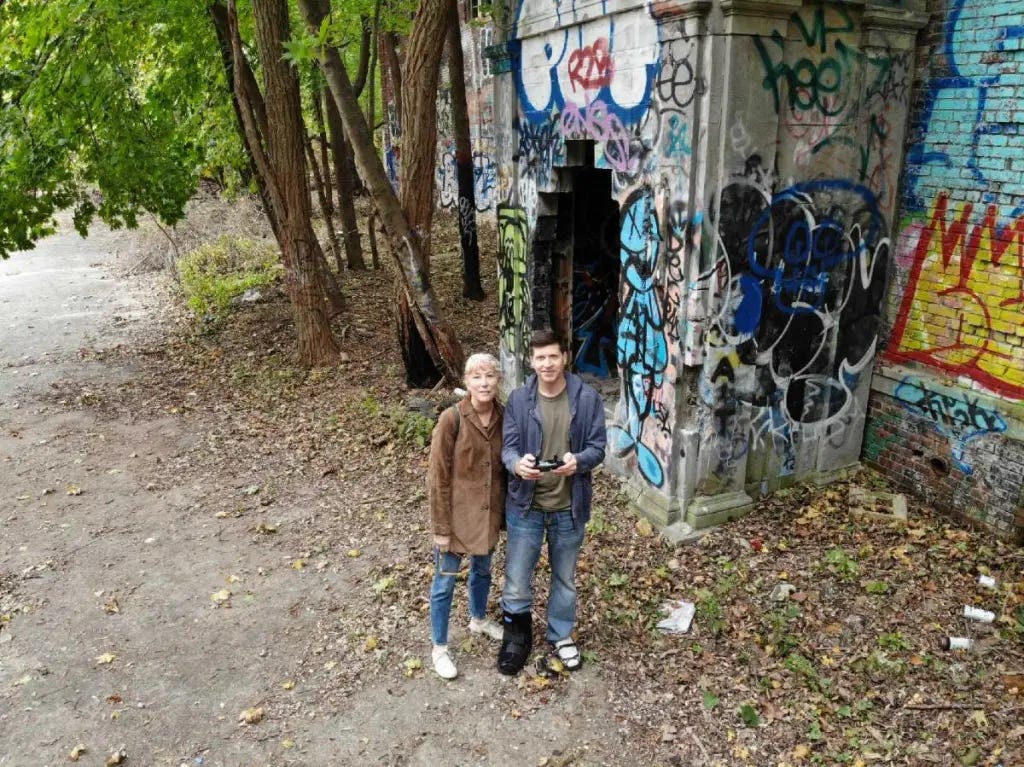
Tom directed me to a side street where there was a secluded break in the tall fencing surrounding the abandoned Colony. He hobbled out of the car toward a spot where the fence had been pulled up. A depression in the dirt underneath it marked where others had shimmy in before us. I pulled up the fence as far as I could—maybe two feet—for Tom to fit through. The boot he was wearing on his broken foot caught on the bottom links and I dropped the fence on his rump to free him. He laughed through his pain. A woman my age shouldn’t have attempted to follow him but I did. Nor should a man with a broken foot laboriously climb up a small hill overgrown with bushes and bramble. But we did. At the top we found a vestige of a road.
Some believe the urban legend that the Colony is haunted by the ghosts of small children murdered by serial killers. The body of a young girl was, indeed, found on the grounds and a man was convicted of kidnaping but not of murdering her.
(Has a 93 Rotten Tomatoes rating!)
Tom and I didn’t believe in ghosts, but we were frightened by dirt bike riding teenagers. Otherwise, we wandered alone. He had a lot of fun flying his drone and testing out different ways to photograph the grounds. I went into some buildings than I should not have.
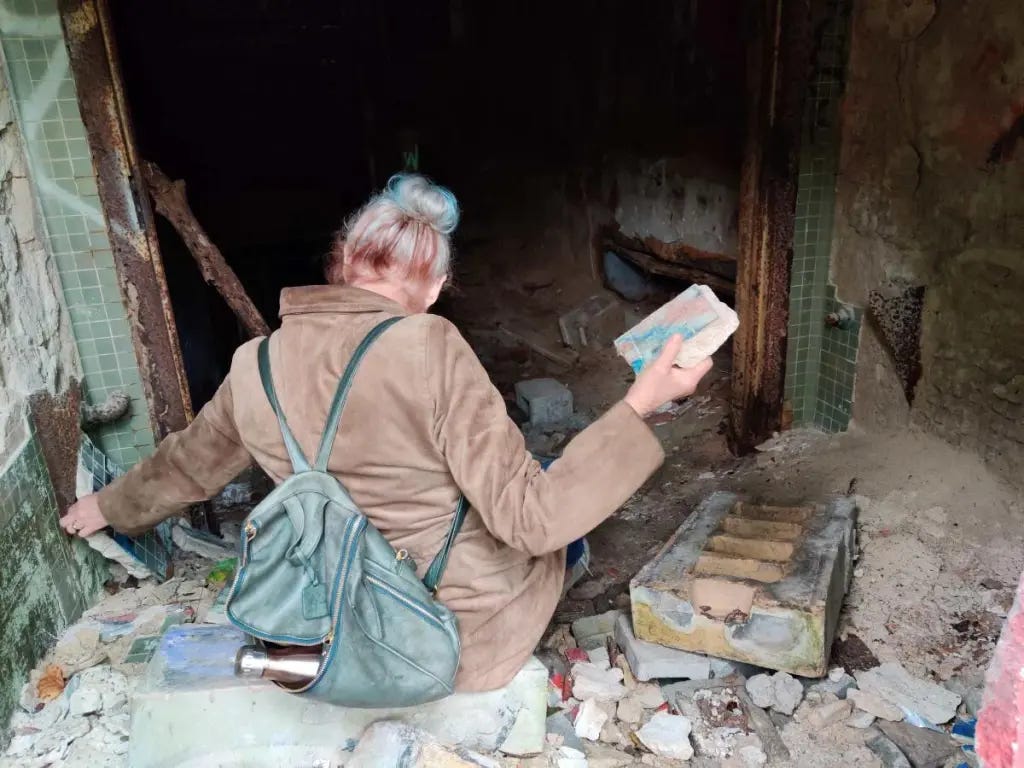
A few times I emerged to discover Tom was nowhere to be found. I roamed around the grounds, which are beautiful, especially on an autumn day. The Colony was eventually supplanted by other public welfare initiatives. The first settlement house in New York City was founded in 1886 to serve people without moving them from their neighborhoods. There were increasing educational, manufacturing, and office opportunities in the city that offered more support and advancement, especially for unmarried women.
The Colony increasingly served as a rest home for the elderly and frail who were unable to work until 1975. Slowly, the buildings were claimed by vegetation, vandalism, and the weather. Eleven of the original 16 buildings that remain standing are collapsed upon themselves.


I continued to wander through the wilderness calling for Tom and getting no response. The structures I passed looked more and more in the growing dusk like tombstones.
At last, I found Tom! He was sitting on the sill of a vacant window, looking through the photographs he had taken. His broken foot in its now dusty boot was propped up on his other leg. He’d never admit to me how much it was throbbing.
“Anything good?” I asked.
“A few,” he replied.
“Ready to go?”
“Just about.”
I helped him up and he took one last photograph. Then we turned around and began the arduous task of finding our way out of the Colony.
Postscript:
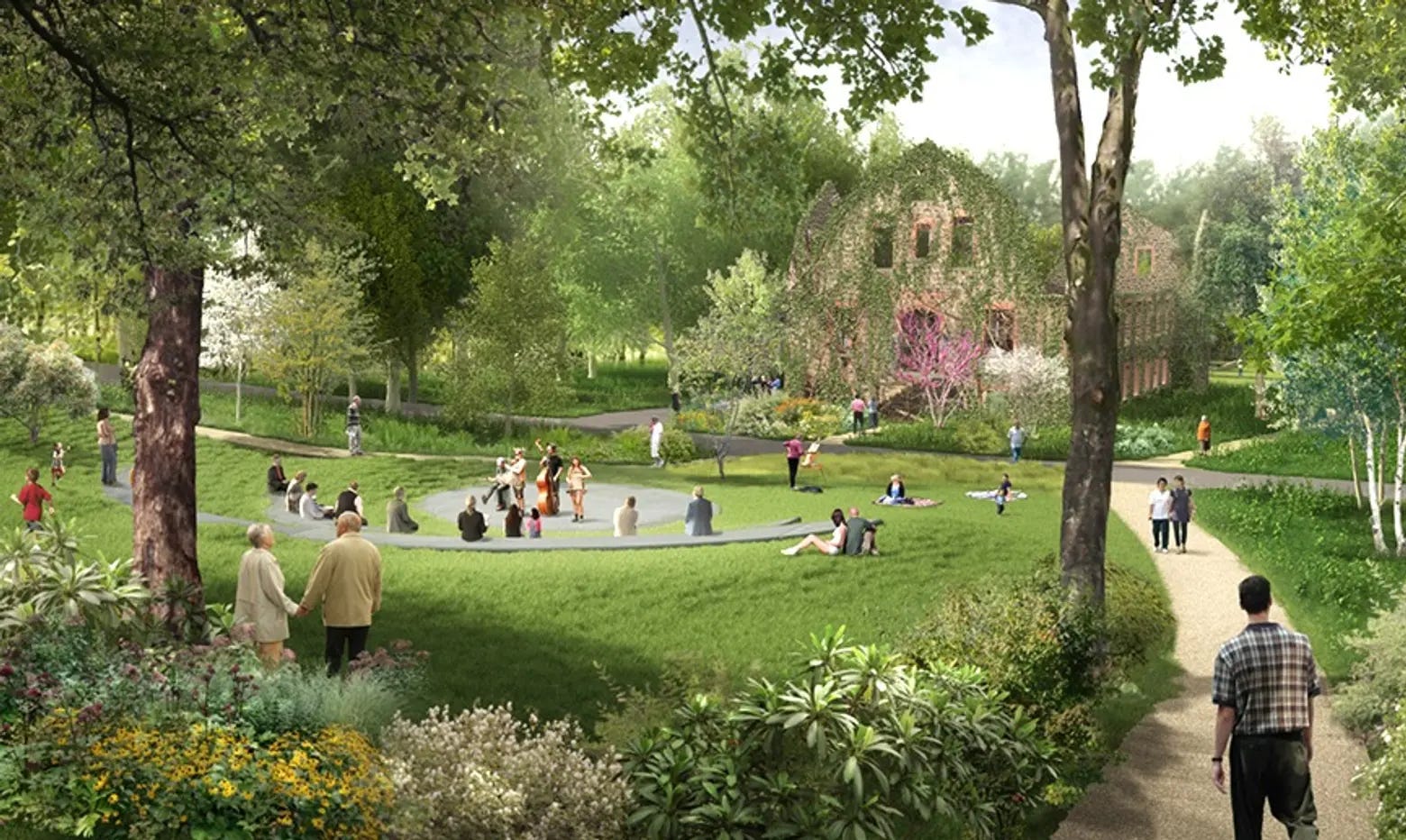
Plans to redevelope the Colony have been put forth for years. So far, nothing has come of them.
And as always send your love with a little press of the heart button!

Love the adventure...
Such a sad piece of history, but oh, so interesting in your typical descriptive way.
Love this!